

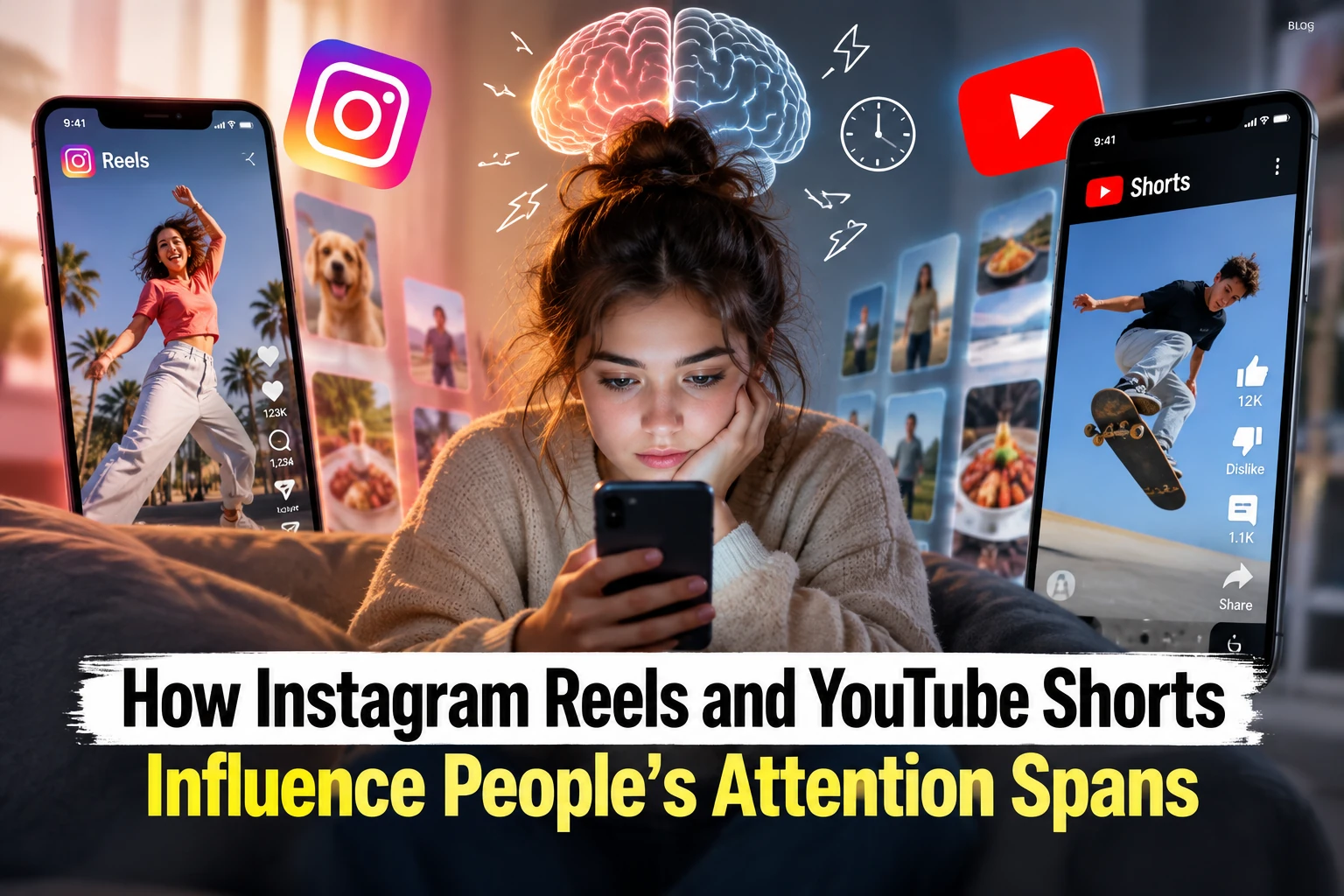
Short-form videos have become a major part of everyday digital life. Instagram Reels and YouTube Shorts allow users to watch entertainment, tutorials, news updates, product reviews, and educational content in a matter of seconds. Their quick format and continuous streams of videos make it easy to consume large amounts of content during short breaks.
However, the popularity of these platforms has raised questions about their influence on people’s attention spans. Does watching short videos make it harder to concentrate on longer tasks, or does it simply change how people choose to consume information? Understanding the possible effects requires looking at viewing habits, content design, and the role of individual self-control.
1. Why Short-Form Videos Are So Engaging
Instagram Reels and YouTube Shorts are designed to present content quickly. Videos often begin with a strong visual, an interesting question, or an unexpected moment that encourages viewers to continue watching.
The vertical format also makes videos convenient to watch on smartphones. Users can move from comedy clips to recipes, interviews, fitness demonstrations, and educational explanations with a simple swipe.
This convenience can make short-form content an appealing way to fill small gaps in the day. However, when viewers move rapidly between unrelated videos, they may become accustomed to frequent changes in topic and visual stimulation.
This does not automatically mean their attention spans are becoming shorter. Individual experiences differ, and research has not established that short-video use inevitably causes lasting attention problems.
2. The Habit of Constant Scrolling
One important feature of short-video platforms is the continuous feed. Instead of choosing a single video and finishing a planned viewing session, users can keep discovering new content without much effort.
Personalized recommendations may also present videos related to previous viewing activity. When the next interesting clip is always available, people may find it difficult to stop watching.
This can affect time management, especially when someone opens an app for a few minutes and ends up spending much longer than intended.
Repeated interruptions may also make it harder to maintain focus on tasks that require sustained effort. For example, checking videos while studying or working can interrupt concentration and increase the time needed to complete a task.
3. Effects on Studying and Workplace Productivity
Long tasks often require people to hold information in memory, follow instructions, and resist distractions. Constantly switching between entertainment and work can interrupt this process.
A student who repeatedly checks Reels while studying may need to reread material or spend additional time returning to the original task. Similarly, an employee who watches Shorts during a work assignment may struggle to maintain a consistent workflow.
The main concern is not simply the length of the videos. It is whether viewing habits regularly interrupt activities that need uninterrupted concentration.
Short videos can also provide useful information, including language lessons, demonstrations, and quick explanations. Their effect depends partly on what people watch, how they use the content, and whether it replaces more demanding activities.
4. Can Short Videos Make Learning Easier?
Short-form videos can be effective for introducing a concept or explaining a simple procedure. A brief cooking demonstration, grammar tip, or exercise instruction may help viewers understand an idea quickly.
Visual explanations can also make information more accessible to people who prefer demonstrations over lengthy written instructions.
However, complex subjects often require context, practice, and deeper analysis. A 30-second video may introduce a scientific principle, but understanding the principle fully could require reading, discussion, and problem-solving.
A useful approach is to treat short videos as starting points for learning rather than complete substitutes for detailed instruction.
5. How Short Videos Affect Sleep and Daily Routines
Watching videos late at night can delay bedtime, especially when users continue scrolling beyond their intended stopping point. Insufficient sleep can then affect concentration, memory, mood, and alertness the following day.
Screen use may also interfere with relaxation when it becomes a substitute for a consistent bedtime routine.
To reduce these effects, consider setting an evening screen limit, keeping your phone away from your bed, or switching to a quieter activity before sleeping.
The goal is not necessarily to eliminate short videos, but to prevent them from interfering with essential activities such as rest, exercise, study, and face-to-face interaction.
6. Practical Ways to Improve Concentration
You can enjoy short-form content while maintaining healthy attention habits.
- Set a viewing limit: Decide how much time you want to spend watching videos before opening the app.
- Disable unnecessary notifications: Reduce interruptions during work, study, and conversations.
- Practice focused work: Set aside 25 to 45 minutes for a task without checking social media.
- Read longer material: Make time for books, detailed articles, or activities that require sustained attention.
- Take intentional breaks: Walk, stretch, or spend time outdoors instead of automatically opening an app.
- Avoid multitasking: Complete important tasks before using short videos as entertainment.
- Review your screen time: Check your device’s usage reports to identify habits you may want to change.