

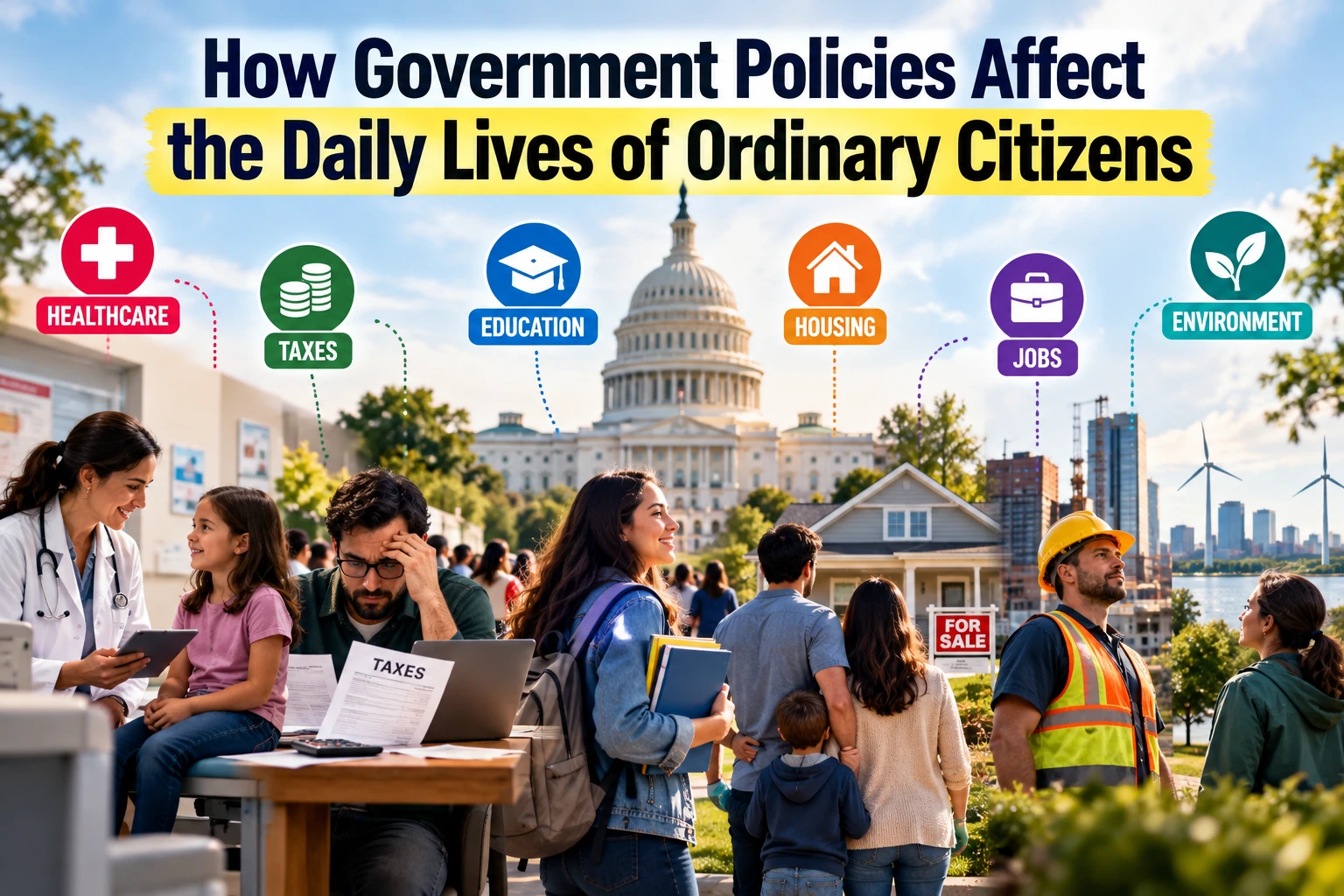
Government policies may seem like subjects discussed mainly in Parliament, newspapers, and political debates, but their effects are visible in everyday life. From the price of groceries and the cost of healthcare to education, employment, transportation, and housing, public decisions influence how individuals and families manage their daily responsibilities.
In India, policies are introduced by both central and state governments to address economic development, public services, social welfare, and infrastructure. Understanding how these decisions work can help citizens make informed choices, access eligible benefits, and participate more effectively in public discussions.
1. How Economic Policies Affect Household Budgets
Economic policies influence the financial decisions of households through taxation, public spending, subsidies, and measures affecting the wider economy.
For example, changes in income tax rules may affect how much money some salaried individuals take home. Indirect taxes can influence the prices of certain goods and services, although the final effect depends on businesses, market conditions, and other costs.
Government spending on infrastructure, public services, and welfare programmes can also affect employment opportunities and access to essential resources.
For ordinary families, understanding applicable tax rules, maintaining financial records, and checking official announcements can make budgeting easier. However, the impact of any policy varies according to income, location, household needs, and eligibility.
2. Food Security and the Public Distribution System
Food is one of the most important household expenses, particularly for families with limited incomes. India’s Public Distribution System helps eligible households access specified food grains at subsidized or other government-supported prices under applicable arrangements.
The system operates through cooperation between central and state governments. Responsibilities include food-grain procurement, allocation, ration-card administration, and distribution through fair-price shops. <Cite refs={[“turn382210search1″,”turn382210search13”]}/>
For eligible families, food assistance can help reduce the amount they need to spend on certain essential items, leaving more money available for rent, education, transport, and other needs.
However, the benefits depend on eligibility, local implementation, and access to the distribution system. Citizens should check their ration-card status and applicable entitlements through official government channels.
3. Healthcare Policies and Medical Expenses
Medical treatment can place a significant financial burden on families, particularly when hospitalization or specialized care is required.
Government healthcare programmes aim to improve access to medical services for different groups of people. One example is Ayushman Bharat–Pradhan Mantri Jan Arogya Yojana (AB PM-JAY), which provides eligible beneficiaries with specified health coverage for qualifying hospital treatment.
According to a Government of India update published in March 2025, the scheme had recorded more than 36.9 crore Ayushman cards by March 24, 2025. <Cite refs={[“turn382210search0”]}/>
For eligible households, such programmes may help reduce certain covered medical expenses. Nevertheless, coverage is subject to scheme rules, eligible treatments, participating hospitals, and other conditions.
Citizens should verify their eligibility and the services available before assuming that every medical expense will be covered.
4. Education Policies and Opportunities for Students
Education policies influence school access, scholarships, curriculum standards, teacher recruitment, and support for students from different backgrounds.
Government schools, scholarship programmes, and other educational initiatives can help families manage education-related costs. Some schemes specifically support students based on factors such as household income, educational level, location, or other eligibility criteria.
Education-related policies also influence the skills available to the workforce. Investment in vocational training, digital learning, and higher education can create opportunities for people seeking employment or career advancement.
Families can benefit by researching official scholarship portals, school admission requirements, and recognized skill-development programmes. Since eligibility and application deadlines vary, checking current guidelines is essential.
5. Employment Policies and Business Opportunities
Government decisions can affect employment through labour regulations, infrastructure spending, industrial development, entrepreneurship programmes, and skill-training initiatives.
For example, public investment in roads, railways, utilities, and other infrastructure can create demand for construction workers, engineers, suppliers, and service providers. The wider economic impact depends on project implementation, business conditions, and the availability of suitable skills.
Small-business policies may also influence access to credit, registration procedures, training, or other forms of support.
For job seekers, understanding relevant employment services and recognized training opportunities can help with career planning. Entrepreneurs should review eligibility requirements, repayment obligations, and official scheme conditions before applying for financial assistance.
6. Housing, Water, and Essential Services
Access to secure housing, clean water, sanitation, electricity, and reliable transportation directly affects quality of life.
Government programmes may support eligible households through housing assistance, water-supply projects, sanitation infrastructure, or improvements to public transport and roads. Implementation and service quality can vary between states, cities, and rural areas.
For example, a reliable local water supply can reduce the time households spend collecting water. Better roads may improve access to schools, hospitals, workplaces, and markets.
These benefits depend not only on policy announcements but also on funding, construction, maintenance, and local administration. Citizens can report service problems through appropriate municipal or departmental grievance channels.
7. How Taxes and Public Spending Shape Communities
Taxes provide a major source of funding for public services and government programmes. Tax revenue can support healthcare, education, infrastructure, public administration, and social protection.
The Union Budget sets out central government receipts and expenditure, while state budgets determine spending priorities within state responsibilities and available resources. <Cite refs={[“turn382210search2″,”turn382210search7”]}/>
Public spending decisions involve choices about priorities and the allocation of limited resources. Citizens can follow budget announcements, review expenditure information, and ask how public projects are progressing.
Understanding these decisions helps people evaluate government performance using evidence, including service quality, implementation, costs, and measurable outcomes.
8. How Citizens Can Stay Informed About Government Policies
Citizens do not need to be policy experts to understand decisions affecting their lives. A few practical steps can help:
- Read announcements from official government departments.
- Verify scheme eligibility before submitting applications.
- Check deadlines and required documents carefully.
- Compare public announcements with credible news coverage.
- Keep records of applications, payments, and complaints.
- Use official grievance mechanisms when eligible services are delayed or unavailable.