

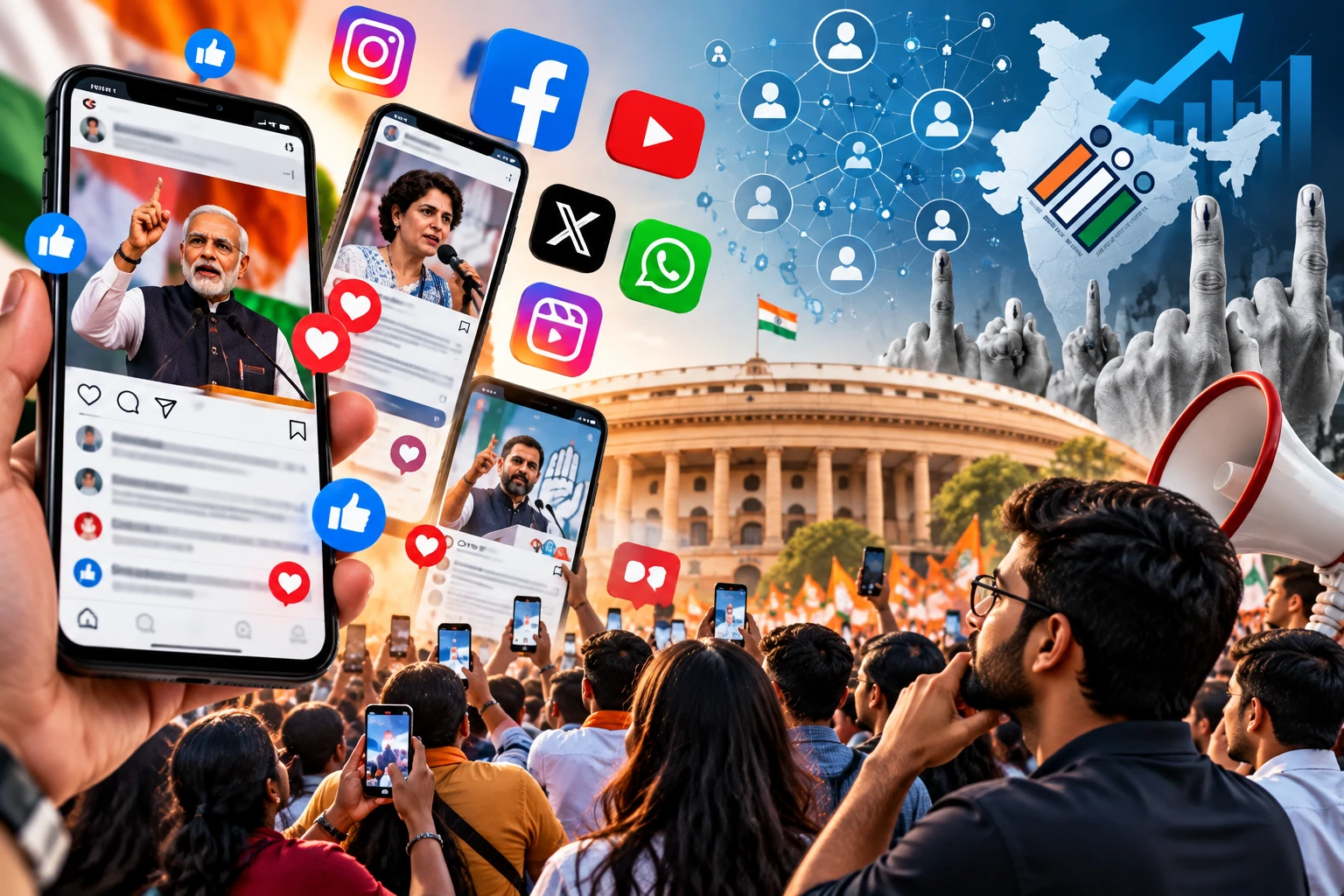
Social media has become an important part of political communication in India. Platforms such as Facebook, Instagram, YouTube, WhatsApp, and X allow political parties, candidates, journalists, and citizens to share information and discuss public issues. Instead of relying entirely on television, newspapers, public meetings, and traditional advertising, political campaigns can now reach voters directly through digital platforms.
With millions of people using smartphones and accessing online content, social media has changed how political messages are created, distributed, and discussed. However, it has also raised concerns about misinformation, online hostility, privacy, and the quality of public debate.
1. Direct Communication Between Leaders and Voters
One major change is the ability of political leaders to communicate directly with the public. Candidates can share speeches, policy announcements, campaign schedules, interviews, and responses to public concerns through their social media accounts.
Previously, many political messages reached audiences through journalists and traditional media organizations. Social platforms give political parties another way to present their positions without depending entirely on these intermediaries.
Voters can also comment on posts, ask questions, and express concerns. Although online engagement does not guarantee that leaders will respond or take action, it creates additional opportunities for public interaction.
2. Reaching Younger and First-Time Voters
Young people increasingly encounter political information through short videos, online discussions, creators, and digital news channels. Social media can introduce first-time voters to election dates, candidate profiles, public policies, and civic issues.
Campaigns often adapt their messages to suit different platforms. Short videos may explain a policy in simple language, while longer interviews and discussions can provide more detailed information.
However, popular content is not necessarily accurate. Young voters benefit from checking the original source of a claim, comparing multiple credible reports, and reviewing official election information before reaching conclusions.
3. Data-Driven Political Campaigns
Digital platforms provide campaign teams with information about audience engagement, including video views, clicks, shares, and comments. These insights can help campaigns understand which messages attract attention and which topics generate discussion.
Some campaigns also use targeted advertising to reach audiences based on permitted demographic or interest-related criteria. This can help them tailor messages to different groups of voters.
At the same time, targeted political communication raises questions about transparency, data privacy, and whether different audiences receive different or contradictory claims. Clear advertising disclosures and responsible data practices are important for public trust.
4. The Growing Influence of Short Videos and Memes
Short videos, graphics, and memes have become common formats for political communication. They can make complicated topics easier to approach and allow citizens to participate in political discussions creatively.
A short clip may highlight a speech, explain a government programme, or summarize a candidate’s position. Memes can also draw attention to public concerns and political controversies.
The limitation is that short formats often remove important context. Edited clips, misleading captions, and oversimplified claims can change how viewers interpret an event. People should look for the full speech, original video, or reliable reporting when context matters.
5. Misinformation and Fact-Checking Challenges
The speed of social media can help accurate information spread quickly, but false or misleading content can travel just as rapidly. During election periods, fabricated images, manipulated videos, misleading statistics, and unverified allegations may influence public discussions.
Forwarded messages can appear trustworthy when they come from friends or family, even when their original source is unknown.
Voters can reduce the risk of sharing misinformation by checking the publication date, identifying the original source, consulting official announcements, and comparing claims with credible news reports. Suspicious images or videos may require additional verification.
Political parties, platforms, media organizations, and citizens all have roles to play in improving the quality of online information.
6. Social Media and Political Accountability
Social platforms can help citizens highlight local problems, including damaged roads, water shortages, public service delays, and concerns about government programmes. Posts that attract attention may encourage public discussion or prompt officials to respond.
Journalists and civic organizations can also use online information to identify issues that deserve further investigation.
However, a viral post does not automatically establish that an allegation is true. Claims about public officials and government performance should be supported by verifiable evidence. Responsible reporting and proper investigation remain essential.
7. Election Rules and Responsible Online Participation
Political communication on social media operates within election laws, platform policies, and applicable advertising requirements. India’s Election Commission issues instructions and guidelines concerning election campaigning, including aspects of digital campaigning.
Candidates, parties, advertisers, and users should remain aware of relevant rules governing campaign conduct, political advertisements, and the period surrounding polling. Requirements may differ depending on the type of communication and the circumstances.
Citizens can contribute to healthier political discussion by disagreeing respectfully, protecting personal information, and avoiding the spread of threats or unverified allegations.